External vs internal wall insulation: which is right for you?
The short answer
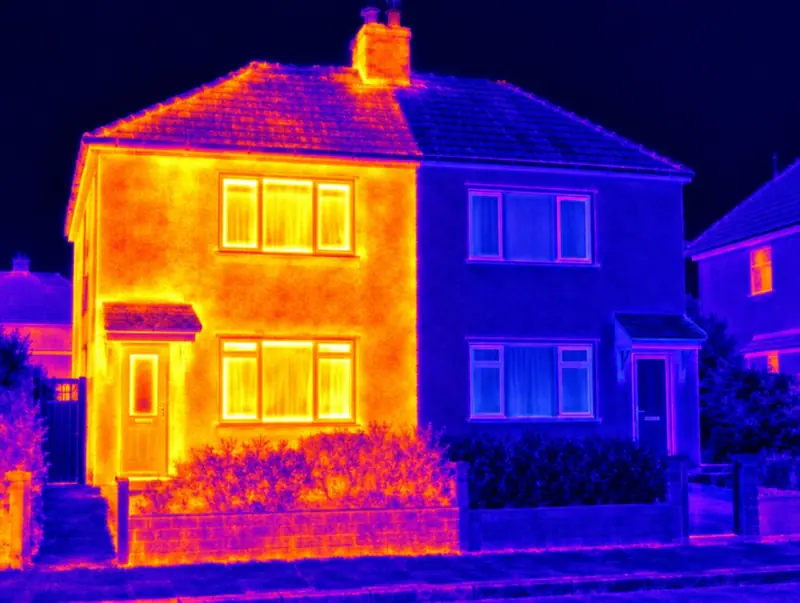
External wall insulation keeps your rooms untouched, covers floor and wall junctions, and protects the outside of the wall, but costs more and changes how the house looks. Internal wall insulation costs less per square metre but loses floor space and means refitting fixtures on every outside wall.
Side by side
| External (EWI) | Internal (IWI) | |
|---|---|---|
| Room size | Unchanged | Each outside wall comes in 60–120mm |
| Disruption | Outside work, scaffolding | Rooms emptied, kitchens and radiators refitted |
| Cold bridges | Wraps floor and wall junctions | Gaps at floors, partitions and reveals |
| Appearance | Outside changes | Outside unchanged |
| Planning | May be needed | Rarely needed (listed buildings aside) |
| Moisture risk | Wall kept warm and dry when detailed well | Higher risk of hidden condensation if poorly designed |
When internal insulation makes more sense
Internal insulation can be the better route where the front must keep its appearance (a listed building, or a fine brick or stone street front), where only a flat or one room is being done, or where scaffolding isn't possible. It needs careful moisture design, especially on solid walls.
Mixing the two
Some homes use both: EWI on the side and rear, internal insulation behind a protected front elevation. The junction between them needs designing so it doesn't become a cold, damp spot.
Related services
Questions people ask
Which is cheaper overall?
Internal is cheaper per square metre, but once you add redecorating, refitting and lost space, the gap narrows.
Which performs better?
For the same insulation, external usually performs better overall because it covers the junctions that internal insulation misses.