External wall insulation in the Highlands and Islands
External wall insulation in the Highlands and Islands: guide prices, how the work is done, and the Scotland planning and building rules, with local pages for Inverness, Fort William and more.
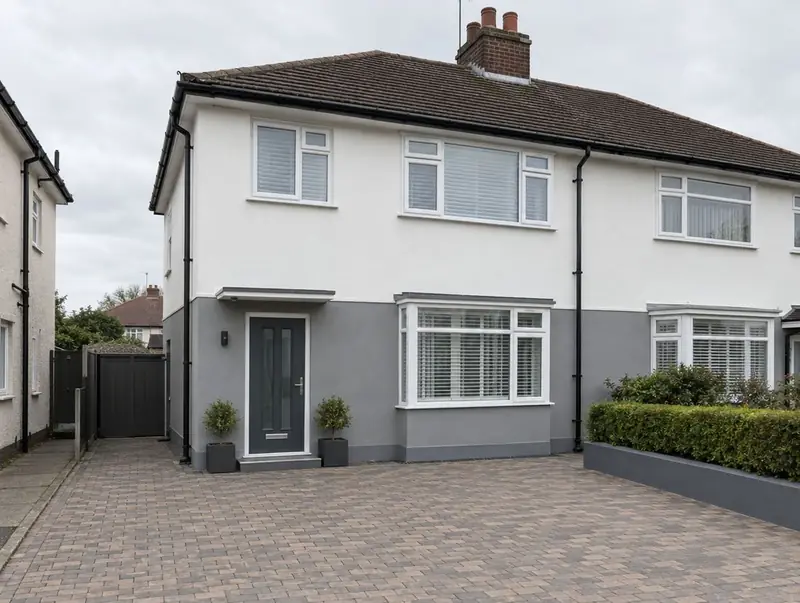
Homes across the Highlands and Islands
Stone and harled houses, very exposed coastal and island locations, and the Cairngorms National Park; remote and island work is by arrangement.
The Highlands and Islands has some of the UK's more exposed locations for wind-driven rain, which shapes the render and detailing we specify.
Services in the Highlands and Islands
- EWI installation
- EPS insulated render
- Mineral wool EWI
- Phenolic EWI
- Wood fibre EWI
- Brick slip EWI
- Insulated cladding
- Insulating lime render
- Silicone render finish
- Mineral & silicate render
- Pebbledash & dry dash EWI
- Solid wall insulation
- Non-traditional houses
- Bungalow EWI
- Terraced house EWI
- Semi-detached EWI
- Detached house EWI
- Park home insulation
- Flats & low-rise blocks
- Social housing EWI
- EWI for landlords
- EWI repairs
- Failed EWI remediation
- EWI surveys
Towns we cover in the Highlands and Islands
The rules in Scotland
- Planning
- Changes to the external appearance of a house can need planning permission in Scotland, and flats, listed buildings and conservation areas always need checking with the council before EWI is ordered.
- Building regulations
- An external wall insulation cladding system on a house normally needs a building warrant under the Building (Scotland) Regulations; only minor like-for-like repairs to an existing system are exempt. Section 6 of the technical handbooks sets the energy standards.
- Fire safety
- Under section 2.7 of the domestic technical handbook, cladding on a building with any storey more than 11m above ground should be European Classification A1 or A2. Below that height, combustible cladding may be used more than 1m from a boundary, with tighter rules closer to it.
- Funding
- Home Energy Scotland Grant and Loan offers up to £7,500 grant plus a £2,500 interest-free loan for solid wall insulation, with a rural and island uplift. You need a valid EPC recommending the measure, a TrustMark-registered installer, and a written offer before work starts. Warmer Homes Scotland helps eligible low-income households through its own installers. Our quotes are for privately funded work unless we confirm in writing that we can carry out a funded job. Grants guide
- VAT
- Installing insulation in a home is zero-rated for VAT until 31 March 2027, then 5%.
Checked October 2026. Rules change, so we confirm them for your address at survey.
External wall insulation in the Highlands and Islands: questions
How much does external wall insulation cost in the Highlands and Islands?
Guide prices run from about £109 to £175 per square metre for the system and finish, plus scaffolding. For an average home that's about £8,595–£11,695 for a mid-terrace, £13,995–£19,195 for a three-bed semi and £20,495–£28,095 for a four-bed detached house, with VAT at 0% on homes.
How long does external wall insulation take?
It depends on the size of the house and the weather: bungalows usually take one to two weeks on site, terraces two to three, semis three to four and detached houses four to six. Blocks of flats take longer.
Can I stay at home during the work?
Yes. All the work is outside, so you can live at home as normal while the scaffolding is up.
What finishes can I choose?
Silicone or mineral render in many colours, pebbledash, brick slips or cladding, alone or combined.